EmbedSocial is a social media aggregation and review widget platform designed for businesses that want to display user-generated content, social feeds, and customer reviews directly on their websites.
The platform is commonly used by ecommerce brands, agencies, restaurants, SaaS companies, and event marketers to create a no-code:
- Instagram feed widget
- Google reviews widget
- TikTok videos widget
- testimonial widgets
- social walls
- shoppable galleries
on their website, without relying on custom development.
At first glance, EmbedSocial looks similar to many other social widget platforms. But after analyzing its features, integrations, pricing structure, and implementation flexibility, it becomes clear that the platform is positioned more aggressively toward conversion-focused social proof rather than simple feed embedding.
That distinction matters.
Many businesses today are no longer embedding social feeds just for aesthetics. They want social content to actively contribute to:
- trust building
- engagement
- product discovery
- conversion optimization
- ecommerce revenue
and that’s where platforms like EmbedSocial have become increasingly relevant.
However, the platform is not perfect for every use case.
While EmbedSocial performs well in areas like review widgets, Instagram integrations, and shoppable UGC galleries, some businesses may encounter limitations related to:
- pricing scalability
- performance overhead
- advanced customization
- dependency on third-party APIs
In this review, we’ll break down:
- how EmbedSocial works
- where it performs best
- where it struggles
- whether it’s good for SEO
- how it compares to competitors
- and which businesses are most likely to benefit from it.
What Is EmbedSocial?
EmbedSocial is a cloud-based social proof platform that helps businesses collect, manage, and display social media content and customer reviews on websites through embeddable widgets.
Instead of manually uploading screenshots of reviews or updating social galleries every week, businesses can connect their accounts and automatically sync content from platforms like Instagram, TikTok, Facebook, YouTube, and Google Reviews.
The biggest appeal of this setup is automation.
Once connected, widgets continue updating dynamically as new content is published on the source platforms. For businesses actively investing in social media marketing, this removes a major operational bottleneck while keeping websites visually fresh.
Over the last few years, platforms like EmbedSocial have evolved beyond simple “Instagram feed plugins.”
They now sit at the intersection of:
- social commerce
- user-generated content
- review marketing
- website personalization
- conversion optimization
and EmbedSocial clearly leans into that positioning.
For example, ecommerce brands can turn customer Instagram posts into shoppable galleries linked directly to product pages, while local businesses can automatically display fresh Google Reviews across high-conversion landing pages.
That flexibility is one of the main reasons the platform has gained popularity among both small businesses and agencies.
Who is EmbedSocial Best For?
EmbedSocial is not equally valuable for every type of website.
The platform becomes significantly more useful when social proof directly influences purchasing decisions or customer trust.
For ecommerce brands, the strongest use case is usually visual commerce.
Instead of relying entirely on polished product photography, brands can showcase real customer content pulled from Instagram or TikTok. This creates a more authentic shopping experience and often helps improve buyer confidence.
Fashion, beauty, fitness, travel, and lifestyle brands tend to benefit the most from this approach because their customers naturally create highly visual content.
For local businesses, the value proposition is slightly different.
Restaurants, salons, clinics, gyms, and service providers often use EmbedSocial primarily for review management and trust-building. Displaying fresh Google Reviews dynamically on service pages can make websites feel more credible and active compared to static testimonial sections.
Agencies, meanwhile, typically value scalability.
Managing multiple client widgets, social feeds, and branded review displays from one dashboard can significantly reduce implementation time.
Key Features of EmbedSocial
One of the reasons EmbedSocial ranks strongly in its category is that it doesn’t position itself as just another “social feed plugin.”
The platform is clearly built around a broader social proof ecosystem.
That means the focus is not only on displaying content, but also on helping businesses use social content to improve:
- trust
- engagement
- conversions
- product discovery
- customer confidence
Some features are genuinely useful from a marketing perspective, while others feel more like standard functionality packaged into premium plans. The overall value largely depends on how heavily a business relies on visual content and user-generated media.
Social Media Feed Widgets
Social feed widgets are still the platform’s core offering.
Businesses can connect social accounts and automatically display content from:
- TikTok
- YouTube
- X/Twitter
on virtually any website.
The implementation itself is fairly straightforward. After connecting an account, users can choose different layouts such as:
- grids
- sliders
- carousels
- masonry galleries
- story-style displays
and then customize the styling before embedding the widget.
From a usability standpoint, this is where EmbedSocial performs quite well.
The setup process is beginner-friendly enough for non-technical teams, but still flexible enough for agencies and designers who want more visual control.
That said, the real value is not the widget itself.
It’s the automatic syncing.
Most businesses underestimate how quickly static social embeds become outdated. A feed that hasn’t changed in months often hurts credibility more than it helps it.
Dynamic syncing solves that problem by continuously refreshing website content as new posts are published on connected social accounts.
For brands actively posting on Instagram or TikTok, this creates a website experience that feels more current and alive.
Review Widgets
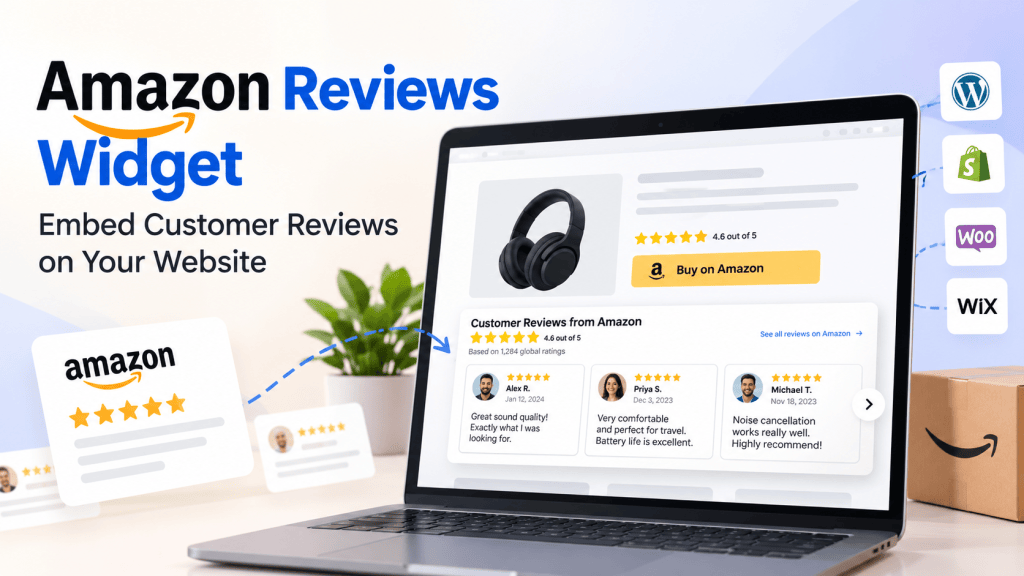
Review widgets are arguably one of EmbedSocial’s strongest commercial features.
The platform allows businesses to aggregate reviews from sources like:
- Yelp
- TripAdvisor
- Airbnb
and display them through customizable widgets across websites.
This matters because modern buyers increasingly validate businesses before converting.
Whether someone is booking a restaurant, choosing a SaaS platform, or buying a product online, reviews now play a major role in conversion behavior.
Instead of manually copying testimonials into a webpage, EmbedSocial automates the process and keeps reviews updated dynamically.
For local businesses especially, this can be valuable.
Fresh reviews signal:
- activity
- trustworthiness
- customer satisfaction
- legitimacy
in ways that static testimonials often cannot.
The display options are also fairly flexible. Businesses can choose between:
- review sliders
- floating badges
- carousel layouts
- sidebar widgets
- compact testimonial blocks
depending on the page design and conversion goals.
However, there’s an important SEO nuance here.
Many businesses assume embedding review widgets automatically improves rankings. That’s not entirely true.
The widgets themselves are more valuable for:
- improving user trust
- increasing conversion rates
- supporting engagement
than directly influencing organic rankings.
The indirect SEO benefit comes from stronger behavioral signals and higher user confidence rather than the embedded reviews acting as crawlable ranking content.
Shoppable Instagram Galleries
This is where EmbedSocial starts leaning more heavily into ecommerce and social commerce.
Instead of displaying social posts purely for aesthetics, businesses can connect Instagram content directly to product pages.
For example:
- a customer wearing a product
- an influencer post
- a lifestyle image
- a creator video
can become clickable and lead users straight to the relevant product listing.
This creates a smoother bridge between:
- inspiration
- social proof
- product discovery
- purchase intent
which is increasingly important for modern ecommerce brands.
Traditional ecommerce galleries often feel overly polished and repetitive. User-generated content tends to feel more authentic, especially for younger audiences that trust creator content more than brand photography.
This is one reason fashion and beauty brands heavily invest in shoppable UGC experiences.
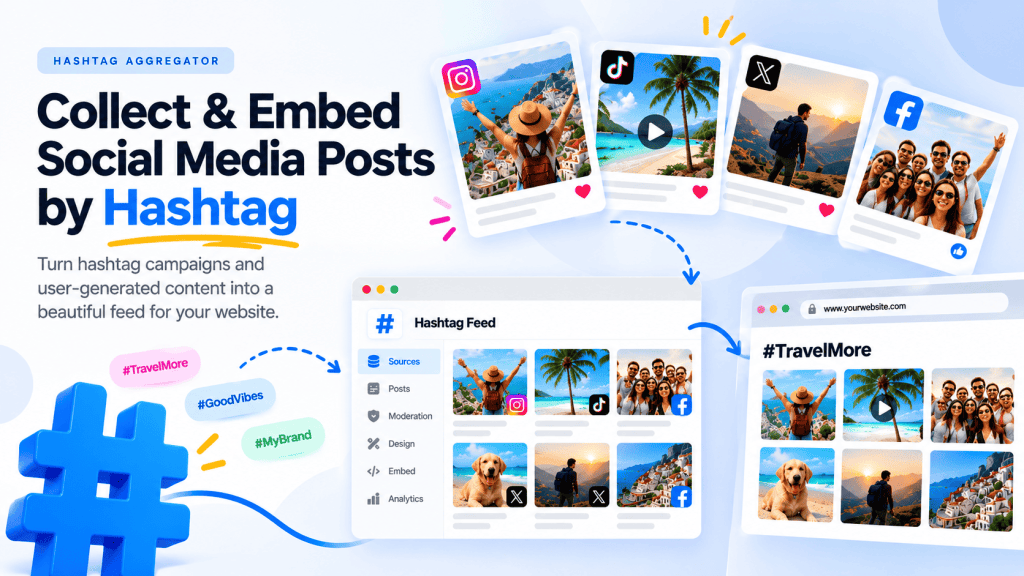
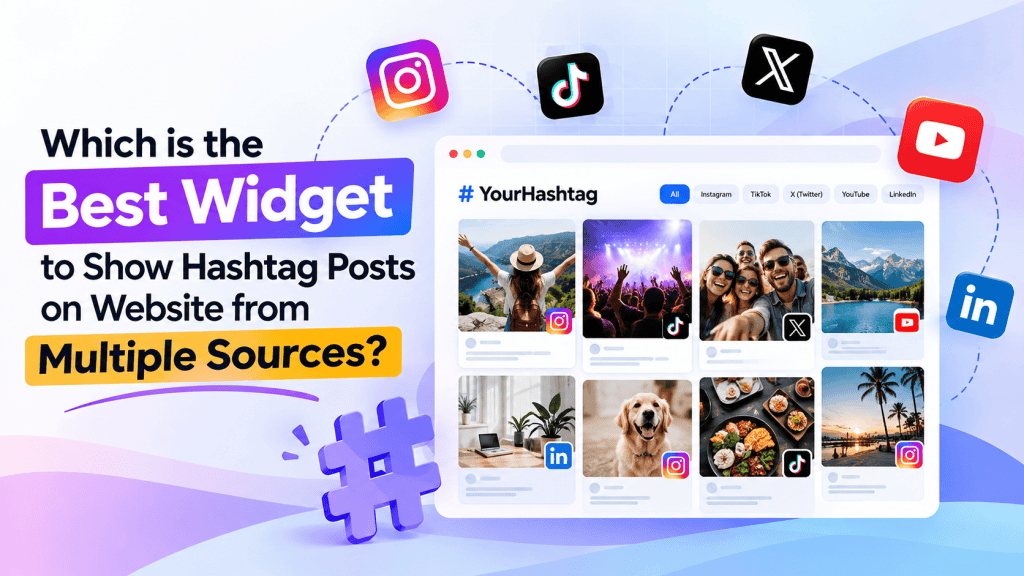
The platform also supports hashtag-based collection workflows, allowing businesses to curate customer content at scale instead of manually sourcing visuals one by one.
Operationally, this can save marketing teams a significant amount of time.
Social Walls & Event Displays
Social walls are another major feature category, particularly for event-driven marketing.
EmbedSocial allows businesses to aggregate posts from:
- hashtags
- mentions
- selected accounts
- campaign feeds
into a live social wall that updates in real time.
These displays are commonly used during:
- conferences
- webinars
- trade shows
- concerts
- livestreams
- product launches
because they encourage audience participation while increasing social visibility around the event.
In practice, social walls work best when moderation is handled properly.
Unfiltered live feeds can quickly become messy or off-brand, especially during public campaigns. EmbedSocial includes moderation controls that allow businesses to:
- approve posts
- filter keywords
- remove unwanted content
- prioritize featured posts
before content goes live.
That moderation layer is more important than many businesses initially realize.
Without it, large public hashtag campaigns can become difficult to manage quickly.
Customization & Design Flexibility
One area where many widget platforms struggle is design consistency.
Poorly styled embeds often look disconnected from the rest of the website, which can negatively affect perceived quality and trust.
EmbedSocial does a reasonably good job solving this problem.
Users can customize:
- layouts
- fonts
- spacing
- colors
- CTA buttons
- card styles
- feed behavior
without needing deep frontend development knowledge.
The widgets generally feel modern and visually cleaner than many older social feed tools still using outdated iframe-style designs.
For agencies, this flexibility becomes particularly useful because clients usually want social widgets to feel native to the website rather than obviously third-party.
Still, advanced customization has limitations.
Businesses wanting highly bespoke experiences may eventually require:
- custom CSS
- developer adjustments
- API-level implementation
especially on enterprise-grade websites with strict design systems.
That’s fairly common across most platforms in this category though, not unique to EmbedSocial.
Multi-Platform Integrations
A major reason businesses adopt platforms like EmbedSocial instead of standalone plugins is centralization.
Managing:
- social feeds
- reviews
- UGC
- visual widgets
across multiple platforms manually becomes operationally inefficient very quickly.
EmbedSocial supports integrations with:
- WordPress
- Shopify
- Webflow
- Wix
- Squarespace
- Elementor
- custom HTML websites
which covers most mainstream website ecosystems.
For WordPress users, implementation is relatively simple through plugin integrations and shortcode support.
Shopify merchants tend to benefit more from:
- shoppable galleries
- homepage social proof sections
- product-linked Instagram feeds
while Webflow users typically prioritize visual flexibility and cleaner frontend presentation.
This broad compatibility makes the platform accessible to both technical and non-technical teams, which is one of its stronger advantages compared to tools requiring deeper developer involvement.
How EmbedSocial Actually Performs in Real-World Usage
Feature lists alone rarely tell the full story.
Most social proof platforms look similar on landing pages. The differences usually become obvious after implementation, especially around:
- usability
- performance
- scalability
- maintenance
- workflow efficiency
and this is where businesses should evaluate EmbedSocial more carefully.
From a usability perspective, the platform is relatively approachable.
Non-technical users can usually launch basic widgets without major issues, which is important because many businesses using these tools do not have dedicated development teams.
The dashboard itself is organized well enough for small and medium-sized teams, though larger multi-brand operations may eventually find workflow management slightly limiting compared to more enterprise-focused platforms.
Where EmbedSocial performs best is speed of deployment.
A business can realistically:
- connect accounts,
- customize a feed,
- publish a widget,
within a relatively short time frame.
That simplicity is one of the main reasons these platforms continue growing despite increasing API restrictions across social networks.
However, performance optimization becomes important as implementation scales.
Heavy social widgets can affect:
- page speed
- mobile responsiveness
- Core Web Vitals
- interaction delays
particularly if businesses embed multiple feeds on the same page without optimization.
This is not exclusive to EmbedSocial — it’s a category-wide issue — but it becomes more noticeable on media-heavy ecommerce websites.
The businesses that usually see the best results are the ones treating social widgets strategically rather than decorating every page with unnecessary embeds.
EmbedSocial Pricing
Pricing is one of the areas where businesses tend to have mixed opinions about EmbedSocial.
At the entry level, the platform feels accessible enough for small businesses wanting basic review widgets or simple social feed embeds. But as implementation grows across:
- multiple websites,
- multiple brands,
- higher traffic volumes,
- advanced UGC workflows,
- ecommerce integrations,
costs can scale relatively quickly.
This is fairly common in the social proof software category, especially among SaaS platforms built around usage-based models.
The key question is not whether the platform is “cheap” or “expensive.”
The real question is:
does the value generated from social proof justify the recurring cost?
For some businesses, the answer is clearly yes.
For others, lighter alternatives may provide enough functionality without the added complexity.
Free Plan vs Paid Plans
EmbedSocial does offer a free tier, but it works more as a testing environment than a long-term production solution.
The free version is generally suitable for:
- trying widget layouts,
- testing integrations,
- understanding the dashboard,
- evaluating ease of use.
However, most businesses will quickly encounter restrictions around:
- branding,
- widget limits,
- customization,
- advanced layouts,
- moderation tools,
- analytics,
- source connections.
Paid plans unlock the features that make the platform commercially useful, particularly for ecommerce and agency workflows.
The higher-tier plans are where features like:
- shoppable galleries,
- white labeling,
- advanced moderation,
- multiple sources,
- analytics,
- team collaboration,
- API flexibility,
become more practical.
For businesses heavily relying on visual social proof, these features can genuinely contribute to revenue and engagement improvements.
But for smaller businesses wanting only a basic Instagram feed, the pricing may eventually feel difficult to justify compared to lighter embed tools.
EmbedSocial Pros and Cons
No social proof platform is perfect for every use case, and EmbedSocial is no exception.
The platform performs very well in certain areas, while other aspects become more noticeable as implementation complexity increases.
Where EmbedSocial Performs Well
Strong Review Widget Ecosystem
Review aggregation is one of the platform’s biggest strengths.
The ability to automatically collect and display reviews from multiple platforms helps businesses maintain fresh trust signals without manual maintenance.
For local businesses especially, this can significantly improve how credible a website feels to first-time visitors.
Ecommerce & UGC Features
Many widget platforms stop at “displaying feeds.”
EmbedSocial goes further into:
- social commerce,
- shoppable galleries,
- user-generated content workflows,
- visual conversion optimization.
That makes the platform more commercially useful for ecommerce brands rather than purely decorative.
Easy Deployment
The onboarding process is relatively approachable for non-technical teams.
Businesses can usually:
- connect accounts,
- build widgets,
- publish embeds,
without requiring developer-heavy workflows.
This accessibility is one of the reasons these platforms remain popular among SMBs and agencies.
Modern Widget Design
Compared to many outdated social feed tools, EmbedSocial’s widgets generally feel cleaner and more modern.
This matters more than many businesses realize.
Poor embed design can make websites feel:
- outdated,
- cluttered,
- low quality,
- inconsistent.
Modern visual presentation directly affects perceived trust.
Where EmbedSocial May Fall Short
Pricing Scalability
As businesses scale:
- traffic,
- widget volume,
- domains,
- clients,
- integrations,
pricing can increase substantially.
Agencies and enterprise users should evaluate long-term scaling costs carefully before committing deeply into the ecosystem.
Dependency on Third-Party APIs
Like every social aggregation platform, EmbedSocial depends heavily on external APIs.
That means functionality can occasionally be affected by:
- Meta API changes,
- permission restrictions,
- platform limitations,
- connection expirations.
This is not necessarily the platform’s fault, but businesses should understand that social widget ecosystems are inherently dependent on third-party platform rules.
Performance Considerations
This is one of the most important SEO and UX discussions around widget-heavy websites.
Social embeds often introduce:
- JavaScript overhead,
- external requests,
- layout shifts,
- slower rendering,
- heavier pages.
If implemented aggressively across many pages, widgets can negatively affect:
- Core Web Vitals,
- mobile experience,
- page speed,
- interaction responsiveness.
Businesses prioritizing SEO should carefully monitor:
- LCP,
- INP,
- CLS,
- script loading behavior,
after implementation.
The strongest implementations are usually selective rather than excessive.
Is EmbedSocial Good for SEO?
This is one of the most misunderstood parts of social widget platforms.
Many businesses assume embedding social feeds directly improves rankings.
In reality, the relationship is much more indirect.
EmbedSocial itself is not an SEO tool in the traditional sense.
However, it can contribute positively to several behavioral and trust-related signals that support stronger website performance overall.
Where EmbedSocial Can Support SEO
Improved Engagement
Well-placed social galleries can increase:
- interaction,
- scrolling,
- exploration,
- visual engagement.
This becomes particularly useful on:
- ecommerce product pages,
- landing pages,
- homepage sections,
- case study pages.
Better Trust Signals
Review widgets and customer content can increase visitor confidence significantly.
Higher trust often improves:
- conversion rates,
- user retention,
- engagement depth.
Google increasingly evaluates content quality through broader satisfaction and trust modeling, even if reviews themselves are not direct ranking factors.
Freshness Signals
Dynamic widgets make pages feel more current and active.
Fresh visual updates can improve perceived relevance, especially for brands heavily active on social media.
Important SEO Limitations
There are also technical tradeoffs businesses need to understand.
Embedded Content Is Not Always Fully Crawlable
Google does not consistently treat embedded widget content as core indexable page content.
In many cases, the embedded feed itself contributes more to user experience than to semantic keyword relevance.
This means businesses should never rely on widgets as replacements for:
- actual copywriting,
- structured content,
- landing page optimization,
- topical depth.
Widgets should enhance pages — not become the page itself.
Widget Overload Can Hurt Performance
One of the biggest mistakes businesses make is overusing social embeds everywhere.
Too many feeds on one page can create:
- slower rendering,
- layout instability,
- mobile lag,
- poor interaction responsiveness.
Modern SEO increasingly rewards:
- fast experiences,
- visual stability,
- smooth interactions,
- low-friction UX.
Heavy widget usage can work against those goals if implemented carelessly.
Best Use Cases for EmbedSocial
EmbedSocial delivers the most value when social proof actively influences purchasing decisions.
The businesses most likely to benefit are usually:
- ecommerce brands,
- hospitality businesses,
- beauty brands,
- restaurants,
- fitness companies,
- creator-led brands,
- agencies managing multiple clients.
These industries naturally generate:
- visual content,
- customer reviews,
- user-generated media,
- community engagement.
That content becomes far more useful when integrated directly into conversion-focused pages.
For example, a fashion ecommerce store can use customer Instagram posts directly on product pages to create a more authentic shopping experience.
A restaurant can display continuously updated Google Reviews instead of static testimonials.
An agency can centralize review management and feed publishing across multiple client websites.
The platform becomes significantly less necessary for businesses that:
- rarely update social media,
- do not rely on visual trust,
- have minimal user-generated content,
- only need lightweight testimonials.
EmbedSocial Alternatives
The social proof software space has become increasingly competitive over the last few years.
Several platforms now overlap heavily in functionality, although each tends to specialize slightly differently.
Elfsight
Elfsight is often preferred by businesses wanting a broader widget ecosystem beyond social feeds.
In addition to social widgets, it supports:
- calculators,
- forms,
- chat widgets,
- FAQ widgets,
- countdown timers,
- review embeds.
This makes it appealing for businesses wanting multiple website enhancement tools under one platform.
Taggbox
Taggbox focuses heavily on social feed aggregation and hashtag campaigns.
It’s commonly used for:
- events,
- campaigns,
- social curation,
- live displays.
The platform is generally simpler than EmbedSocial but may feel less commerce-focused.
Walls.io
Walls.io is stronger in live social wall functionality and large-scale event experiences.
Businesses primarily running:
- conferences,
- webinars,
- livestream campaigns,
- public social displays,
often prefer platforms specifically optimized for real-time wall management.
SociableKIT
SociableKIT is typically positioned as a lighter and more affordable embed solution.
It works well for businesses wanting:
- simple feed embeds,
- lower complexity,
- budget-friendly implementations.
However, it usually lacks the broader social commerce and review-management depth found in more advanced platforms.
Frequently Asked Questions
Is EmbedSocial free?
EmbedSocial offers a free plan with limited functionality. Most businesses eventually require paid plans for advanced widgets, customization, moderation, and multiple integrations.
Does EmbedSocial support Instagram Reels?
Yes. The platform supports Instagram Reels, feed posts, stories, hashtag feeds, and tagged content through official integrations.
Can EmbedSocial display Google Reviews?
Yes. Businesses can embed Google Reviews through customizable widgets such as sliders, badges, carousels, and testimonial sections.
Does EmbedSocial slow down websites?
It can affect page performance if too many widgets are loaded aggressively across a website. Proper optimization and selective implementation are important.
Is EmbedSocial good for ecommerce?
Yes, particularly for ecommerce brands using:
- UGC marketing,
- visual commerce,
- social proof,
- creator content,
- shoppable galleries.
Does EmbedSocial help SEO?
Indirectly, yes.
It can improve:
- engagement,
- trust,
- user interaction,
- conversion behavior,
but should not be treated as a direct SEO ranking tool.
Final Verdict
EmbedSocial is one of the stronger platforms in the social proof and website widget category, particularly for businesses that rely heavily on:
- user-generated content,
- customer reviews,
- visual commerce,
- social engagement.
Its biggest strengths are:
- easy implementation,
- strong review integrations,
- ecommerce-friendly features,
- modern widget design,
- multi-platform compatibility.
For ecommerce brands and agencies especially, the platform can help bridge the gap between social activity and on-site conversion optimization.
At the same time, businesses should evaluate:
- long-term pricing,
- performance impact,
- API dependency,
- scalability needs,
before rolling it out aggressively across large websites.
The businesses that tend to see the best results are the ones using EmbedSocial strategically — placing social proof in high-intent conversion areas rather than treating widgets as decorative website elements.
When implemented thoughtfully, platforms like EmbedSocial can genuinely improve:
- trust,
- engagement,
- visual credibility,
- customer confidence,
- and conversion performance
without requiring complex custom development.
NOTE – We use our Unbiased content standards and review methodology to provide collect information and present on our blogs at Widgets Code. If you find any information to be misleading or incorrect, feel free to reach us at widgetscode[@]gmail[dot]com





Leave a Reply